Newsletter 90
Newsletter 90 – Kindness and the Scandinavian Approach to Partial Dentures
**Just a little note from me!**
I'm sending this newsletter out twice, at different times of the day, because I know so many of you are reading it from all corners of the world!
I really want to give everyone the chance to see it, especially with my free international webinar coming up on Tuesday 17 November.
So, if this lands in your inbox twice, I hope you won't mind! I'm just so passionate about sharing these wonderful partial denture techniques and helping as many colleagues and patients as possible.
Thank you so much for your continued interest and support. It really does mean a lot to me!
An Approach That Has Transformed My Clinical Life!
I want to share something with you that I'm incredibly passionate about.
**The Scandinavian approach to removable partial denture design has genuinely transformed the way I practise dentistry.**
It's made my partial dentures more predictable, comfortable, hygienic and easier for patients to live with. And, perhaps most importantly, it's made providing them so much more enjoyable!
One of the biggest changes I've seen in my own practice has been the dramatic reduction in the number of review and adjustment appointments required after fitting.
**Previously, my patients needed an average of around FIVE review appointments. With this approach, that figure has fallen to approximately 1.5 per patient!**
That's an enormous difference for patients, clinicians and dental teams.
These dentures are designed to be hygienic, functional, robust and adaptable, while respecting the remaining teeth and supporting tissues.
I genuinely believe this approach could transform removable prosthodontics for many more clinicians around the world.
And Jean's case is a lovely example of why I feel so strongly about it.
Jean's Story – Kindness, Careful Prosthodontics and a Wonderful Patient Outcome
Jean came to see me because she wanted a comfortable, functional and durable upper partial denture.
She had experienced significant dental problems over the years, including a difficult extraction experience in the upper left quadrant, followed by problems with infection involving the sinus.
She had also lost a considerable amount of alveolar bone in this region.
Jean had explored the possibility of dental implants, but placing implants in this area would have involved bone grafting and further surgery.
**She specifically came to see me because she wanted to explore a removable partial denture as an alternative to implants and bone grafting.**
One of the things I feel is important is that we should listen carefully to what our patients actually want, rather than automatically assuming that fixed teeth or implants must be the best solution.
For Jean, avoiding further surgery was extremely important.
She wanted to chew comfortably, look after her remaining teeth and feel confident that she was doing the right thing for her long-term oral health.
Jean's Wish List
Jean had thought very carefully about what she wanted from her dental treatment.
Her wishes included:
- To have a clean and healthy mouth with strong teeth.
- To take the best care of her mouth following the difficulties she had experienced since an accident in 2012.
- To benefit from developments in dentistry that could improve her health.
- To be able to chew food properly, recognising the important role that teeth play in digestion.
She also asked a very sensible question:
**Would a partial denture be possible, or would it be inadvisable?**
My answer was that a carefully designed partial denture was absolutely worth considering.
The Clinical Situation
Jean was missing her upper left second premolar and first and second molars, teeth 25, 26 and 27.
The aim was to replace these teeth with a cobalt-chromium removable partial denture, using the remaining natural teeth for support and retention while keeping the design as hygienic and unobtrusive as possible.
Working closely with my wonderful dental technician, Rowan Garstang, we planned the denture using the Scandinavian approach to removable partial denture design.
This involves thinking very carefully about where the metal framework contacts the teeth, how the denture is supported, where the clasps are positioned and how we can minimise unnecessary coverage of the gingival tissues.
One of the fundamental principles is to avoid covering gingival margins wherever possible.
Where the framework does need to cross the gingival margin, I prefer it to cross around the midpoint of the tooth rather than interproximally, because the interdental areas are particularly susceptible to plaque accumulation and gingival inflammation.
These little design details can make a tremendous difference to the long-term health of the remaining teeth and supporting tissues.
What About the Clasps?
This was a particularly interesting aspect of Jean's case.
We planned clasps on teeth 16 and 24 to provide retention for the denture.
As part of our discussions, I explained that some of the metal clasping might be visible when she smiled.
And Jean was absolutely fine with that!
She wasn't particularly concerned about having a little visible metal. What mattered most to her was that the denture would be robust, durable, comfortable and reliable.
I think this is such an important lesson.
We must never assume that every patient wants all the metal hidden at any cost.
Sometimes patients are perfectly happy with visible clasps when they understand their purpose and the benefits they provide.
We also discussed the possibility of using tooth-coloured acetal resin veneer clasps, sometimes called shell clasps, which can be useful when patients are particularly concerned about aesthetics.
These can disguise the appearance of metal clasps, although they can discolour or deteriorate with time and may need replacing.
In Jean's case, however, she was quite happy with the conventional metal clasps, so there was no need to complicate the design unnecessarily.
An Interesting Request About the Denture Teeth
Jean also had a very specific wish concerning the appearance of her replacement teeth.
Because of her previous orthodontic treatment and the arrangement of the teeth on the opposite side, she wanted the replacement upper left second premolar, tooth 25, to be shaped like a molar.
This would give her a better sense of symmetry with the right side.
And why not?
This was important to Jean, and we were able to incorporate her preference into the tooth arrangement.
I love this aspect of removable prosthodontics. We have the flexibility to position and shape denture teeth to suit the individual patient.
We don't have to make everyone look the same.
Careful Planning and Accurate Clinical Records
One of the things I want to emphasise in this case is how much attention we paid to the relationship between the denture and Jean's existing occlusion.
We used a Duralay resin mock-up to establish the framework design and allow Jean to see the proposed appearance of the clasps.
Importantly, the metal framework was designed to fit within her existing occlusion.
We weren't trying to change Jean's bite or increase her occlusal vertical dimension.
The denture was constructed to fit into her existing maximum intercuspal position, so that her natural teeth would come together in exactly the same way with or without the denture.
For the occlusal registration, we ensured that the wax rim was kept out of occlusal contact to avoid compressing the mucosa supporting the free-end saddle.
We used Futar D registration material only in the edentulous saddle region, rather than placing it between the occluding natural teeth.
The natural teeth already interdigitated accurately in maximum intercuspation, so there was no need to introduce unnecessary registration material between them.
This allowed us to record the relationship accurately without disturbing the seating of the master casts.
Again, these are relatively small clinical details, but they can make a huge difference to the predictability of the finished denture.
The Finished Denture
Rowan constructed a beautiful cobalt-chromium partial denture, replacing Jean's missing upper left posterior teeth.
The framework was carefully designed to provide support and retention while minimising unnecessary gingival coverage.
The denture fitted beautifully, and Jean was delighted with the result.
What I particularly loved was that the finished prosthesis addressed the things that mattered most to her.
She could replace her missing teeth without undergoing further surgery or bone grafting.
She had a robust, functional denture that was designed to be hygienic and maintainable.
And she had been involved in the decisions throughout the process.
A Wonderful Message From Jean
After treatment, Jean very kindly sent me a handwritten thank-you note.
She told me that her partial denture “has improved my health; and I am very pleased with it.”
It's not only about making a technically excellent prosthesis. It's about understanding the person sitting in front of us, listening to their concerns and helping them achieve something that genuinely improves their life.
Jean's case is a wonderful reminder that a carefully designed removable partial denture can be an excellent definitive treatment in its own right.
It doesn't have to be a second-best option.
And it certainly doesn't have to be something we're embarrassed to offer!
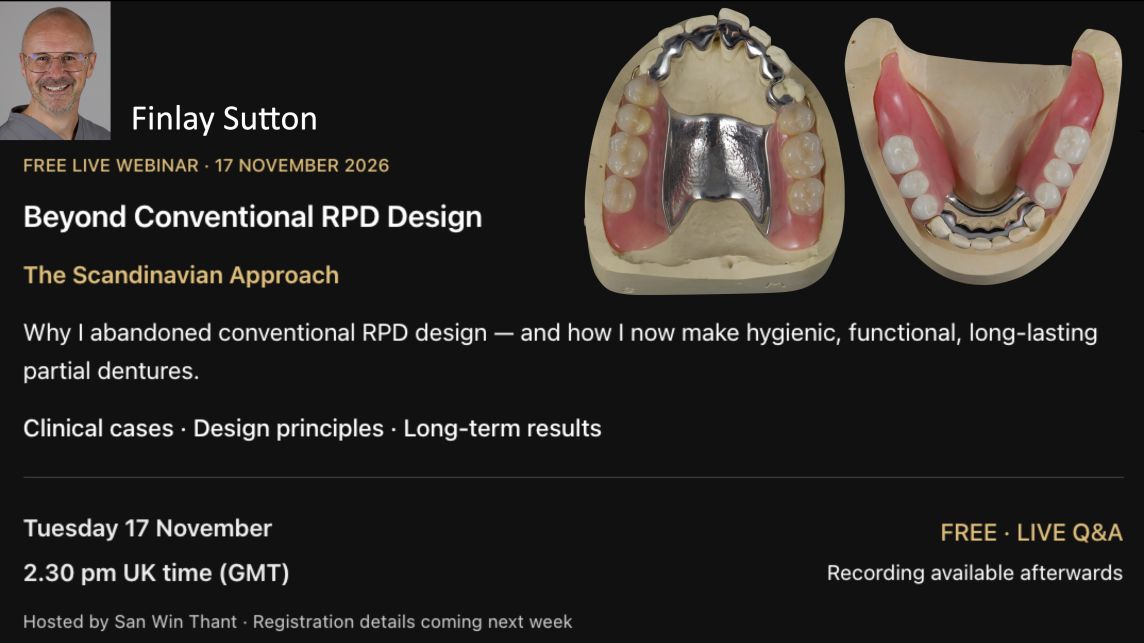
FREE International Webinar – Tuesday 17 November 2026
Beyond Conventional RPD Design: The Scandinavian Approach to Hygienic, Functional and Long-Lasting Dentures
2:30 pm UK time | Live online | FREE to attend
Next Tuesday, I'll be delivering a free international webinar hosted by Dr San Win Thant, explaining the principles behind the Scandinavian approach and why I believe it makes such a difference.
I'll be sharing clinical cases, design principles, practical tips and plenty of photographs showing how these dentures work in real patients.
We'll explore how to design partial dentures to minimise unnecessary gingival coverage, protect the remaining teeth, improve comfort and function, and make long-term maintenance easier.
If you're interested in improving your partial dentures, I'd absolutely love you to join me!
Scandinavian Design Meets Digital Dentistry!
These principles aren't restricted to conventionally manufactured cobalt-chromium frameworks.
They can also be applied to digitally designed and 3D-printed partial denture frameworks!
I find this incredibly exciting.
Digital technology is developing rapidly, and there's a wonderful opportunity to combine modern manufacturing methods with the biological and mechanical principles of good partial denture design.
Of course, we still need excellent clinical records, accurate impressions or scans, careful assessment of undercuts and thoughtful design.
Technology doesn't replace good prosthodontics!
But when we get the fundamentals right, digital manufacturing opens up some fantastic possibilities.
I'm hugely enthusiastic about where this is heading.
Please Share This With Your Colleagues!
One of my biggest ambitions is to help make this approach to removable partial dentures more widely understood and adopted around the world.
I really believe it can improve the experience of wearing dentures for patients and make providing them more satisfying for dentists.
So please, if you know colleagues who are interested in removable prosthodontics, share this newsletter and the free webinar with them!
Whether they're in the UK, Europe, America, Asia, Australia or anywhere else, I'd love them to discover these techniques.
The more we share our knowledge and learn from each other, the better we can make dentistry for our patients.
Come and Learn With Me in Person!
I'm also doing lots of teaching over the coming months and throughout 2027.
Charlotte, North Carolina, USA – Friday 4 December 2026
I'll be teaching complete and partial dentures at the Carolina Collaborative Study Club, part of the Seattle Study Club network.
There'll be a live clinical impression demonstration, interactive partial denture design exercises, loads of clinical cases and plenty of practical advice.
For further information and booking, please contact Juell Burgess at marketing@harmonyoralsurgery.com.
Stavanger, Norway – Thursday 21 January 2027
I'll be sharing my approach to complete dentures, including the clinical techniques that help make them more predictable, functional and natural-looking.
I'm looking forward to returning to America for more teaching, including Cincinnati.
And If You Really Want to Get Into the Detail…
Come on one of my hands-on courses at Garstang Dental Referral Practice in Lancashire, UK!
This is where we can really explore the clinical techniques, design principles and practical details in depth.
You'll see exactly how I approach cases, how I work with my wonderful technician Rowan Garstang, and how we bring everything together to create dentures that our patients love.
We have courses covering complete dentures, partial dentures, immediate dentures and implant overdentures, with further dates throughout 2027.
I absolutely love these small-group courses because there's so much opportunity for discussion, questions and individual learning.
My aim is for you to leave feeling confident, inspired and ready to put what you've learned into practice on Monday morning!
Ultimately, this is about making removable prosthodontics better for everyone.
Better for our patients. Better for our dental teams. And much more rewarding for us as clinicians.
I really hope to see you online or in person soon.
All the very best,
Fin
-------------------------------------------------------------------
Want to make much better dentures?
Removable Partial Dentures — 2 days
My two-day RPD course is all about designing simpler, kinder and more effective partial dentures. We cover everything from assessment and design through to impressions, support, clasping, occlusion and working brilliantly with your technician.
Complete Dentures — 2 days
Come and spend two days with Rowan and me making complete dentures on a real patient, from start to finish. You’ll see every clinical and technical stage, understand why we do it, and learn a predictable approach you can take straight back into practice.
Implant Overdentures — 2 days
A practical approach to planning and making implant-retained overdentures, bringing the surgical, restorative and technical elements together.
Immediate Dentures — 1 day
Planning, impressions, tooth positioning, extractions, fitting and aftercare — making the transition from natural teeth to dentures as predictable as possible.
All Dentures Refresher Day — 1 day
Been on my Complete Denture course before? Come back for a concentrated day to refresh, refine and build on what you learnt.
Great dentures. Small groups. Loads of practical dentistry. And plenty of fun.

Upcoming free Webinar
This FREE webinar could completely change the way you think about removable partial dentures!
I'm delighted to be presenting a FREE international webinar, hosted by Dr San Win Thant, on Tuesday 17 November 2026.
I'll be sharing why I've moved away from conventional British and American RPD designs and now exclusively use the Scandinavian hygienic approach.
Just as I've demonstrated with Simon's treatment in this newsletter, I'll explain not only what I do, but why I do it. I'll take you through the clinical reasoning, biological principles and engineering decisions behind my approach to removable partial dentures, showing how every design choice contributes to better function, improved hygiene and long-term success.
My aim is to change the way you think about partial dentures, not simply the way you design them.
Drawing on my own clinical cases, research and long-term outcomes, I'll explain the biological and engineering principles behind this approach and why I believe it produces better removable partial dentures.
I'll be covering:
- RPD design: Why I favour the Scandinavian approach over conventional designs.
- Removable bridges: How partial dentures can be engineered to function almost like fixed bridgework.
- Periodontal health: Minimising gingival coverage and protecting the remaining teeth.
- Framework design: Support, retention, reciprocation and hygienic clasp design.
- Impression techniques: Functional border moulding and achieving excellent stability.
- Occlusion: Getting the bite right for comfort, function and longevity.
- Future-proofing: Designing RPDs that can be modified following further tooth loss.
- Long-term results: Real clinical cases showing these principles in action.
'll be presenting for approximately 50 minutes, followed by a live Q&A.
Tuesday 17 November 2026 | 2.30 pm GMT
Completely FREE – everyone is welcome!
I hope you'll join me. My aim is to challenge conventional thinking and demonstrate how the Scandinavian approach can transform the way you design and provide partial dentures.


In House Courses
These are small, personalised clinical courses that I run here in practice with Rowan working alongside me in the laboratory next door.
People travel to Garstang from all over the world to attend them, and we are very much set up for international delegates. Over the years we have welcomed clinicians and technicians from the USA, Canada, Australia, New Zealand, Scandinavia, Japan, India, China, Taiwan, Malaysia, Indonesia, South Africa, across Europe, and many other countries besides.
The courses are very different from large lecture-style meetings. The atmosphere is relaxed, friendly, practical, and highly interactive. We keep the delegate numbers deliberately low so that people can genuinely see what is happening, ask questions throughout the day, and properly understand each step of treatment.
The courses are built around real patients, real workflows, and real removable prosthodontics — not idealised textbook dentistry.
A huge amount of practical information is shared throughout the sessions:
• complete dentures
• removable partial dentures
• immediate dentures
• implant overdentures
• tooth positioning
• impression techniques
• occlusion
• Scandinavian partial denture design
• aesthetics
• laboratory communication
• workflow simplification
• patient management
• and the emotional side of denture treatment
The emphasis throughout is on practical solutions and understanding the thinking behind the treatment — not simply following recipes blindly.
One of the major advantages of the courses is that Rowan and I work side-by-side clinically and technically every day. Delegates therefore gain insight into both the clinical and laboratory aspects of treatment simultaneously, which many people find transformational in helping them understand removable prosthodontics properly.
People often comment that the courses completely change how they see dentures and removable prosthodontics. Many delegates tell me they leave feeling:
• more enthusiastic
• more confident
• less stressed
• and far clearer about how to approach difficult cases
The courses are expensive, and intentionally so. They reflect the enormous amount of experience, preparation, photography, documentation, teaching, clinical exposure, and honest sharing that goes into them. I hold absolutely nothing back — clinically or emotionally — because my genuine aim is to help people improve and avoid years of frustration and costly mistakes.
Honestly, I think these courses can significantly accelerate a clinician’s understanding of removable prosthodontics. Difficult denture cases can cost many thousands of pounds, huge amounts of stress, and endless emotional energy. If attendees apply even a portion of the ideas discussed throughout the courses, it can profoundly improve both patient outcomes and professional enjoyment.
My hope is simple:
to help clinicians and technicians make natural-looking, comfortable dentures that genuinely improve patients’ lives — whilst also helping people rediscover enthusiasm for removable prosthodontics.


Carolina Collaborative Study Club
Charlotte, North Carolina, USA – Friday 4 December 2026
Carolina Collaborative Study Club | Seattle Study Club Network | 9:00 am – 3:00 pm
The Cinderella Subject: How to Deliver Beautiful, Functional Dentures Your Patients Will Love
If you've ever struggled with dentures, found them frustrating or wondered why some work beautifully while others don't, this is a day for you!
I'll be sharing the clinical techniques and systems I've developed over many years to make removable prosthodontics more predictable, comfortable, functional and enjoyable for both patients and clinicians.
And there'll be a LIVE clinical demonstration!
I'll be taking a lower primary alginate impression on a volunteer, Dr Blake Young, showing exactly how I record the sulcus accurately and why this is so important for achieving excellent denture retention, stability and support.
I'll be wearing my video glasses so everyone can watch exactly what I'm doing, live on the big screen!
You'll see the materials I use, how I handle the impression tray, the little details that make all the difference and, most importantly, WHY they matter.
What else will we cover?
- Complete dentures – practical techniques for impressions, jaw registration, tooth positioning,aesthetics, occlusion and achieving excellent retention and stability.
- Removable partial dentures – my Scandinavian approach to hygienic design, preserving remaining teeth and creating robust, comfortable, functional and future-proof prostheses.
- Implant overdentures – why I believe in planning the teeth and dentures first, before deciding where implants should go.
- Managing challenging cases – understanding patients, managing expectations, building trust and helping people adapt successfully.
- Getting things right first time – simple, repeatable clinical workflows that make denture construction more predictable.
I'll be sharing loads of clinical photographs and videos, real patient cases, practical tips and some of the mistakes I've made along the way!
We'll also have interactive partial denture design exercises, with the opportunity to work through real cases and discuss different design options.
Everyone will receive useful handouts, including our complete denture construction manual and Scandinavian partial denture design resources, which they can take back into practice and start using immediately.
And there's another brilliant reason to come!
Gary Dickenson, CEO of Seattle Study Club, is joining us for the day!
Gary is a wonderfully charismatic chap, and this is a fantastic opportunity to meet him and learn more about Seattle Study Club, an exceptional international postgraduate dental education organisation.
One of the things I love about these study clubs is the opportunity to meet like-minded people who are passionate about dentistry, learning and improving the care we provide for our patients.
Above all, we're going to have FUN!
This won't be a day of complicated theory. It's about real patients, real clinical challenges and practical solutions that work.
There'll be plenty of opportunities to ask questions, examine the dentures and clinical examples I'll be bringing along, share ideas and have a good laugh together.
My aim is simple: I want everyone attending to go back into practice on Monday morning feeling inspired, more confident and ready to try something new!
If you're a dentist or dental technician in North Carolina, South Carolina, Virginia or the surrounding area, and you really want to improve the dentures you provide for your patients, I'd absolutely love you to join us in Charlotte on Friday 4 December!
Interested in joining us?
For further information and booking, please contact Juell Burgess, who is helping Dr Riddhi Patel organise the event.
Email: marketing@harmonyoralsurgery.com
It's going to be a fantastic day of learning, live demonstrations and plenty of fun. I hope to see you there!
P.S. If you can't make Charlotte, don't worry! I'll be back in the USA in April 2027, including a visit to Cincinnati. I'd love to see you there! See below.


Forsyth Study Club
What a Fantastic Visit to Winston-Salem, North Carolina, USA!
Forsyth Study Club – Friday 23 October 2026
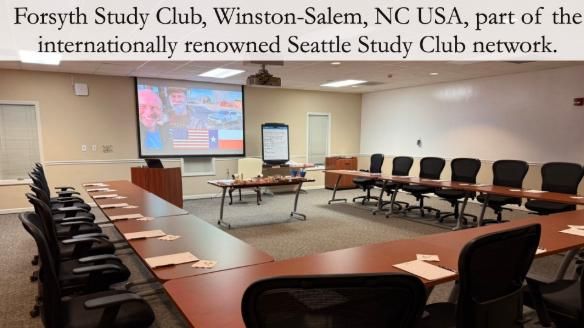
What an absolutely wonderful time I had in Winston-Salem, North Carolina, teaching at the Forsyth Study Club, part of the brilliant Seattle Study Club network!
I had such a fantastic visit, and I really can't thank everyone enough for making me feel so welcome.
A huge thank you to Dr Todd Smith and his colleague Dr Brad Russell for inviting me over, and to the wonderful Brittany Almond, who did such a brilliant job organising everything and making sure the whole visit ran smoothly. Brittany, you were an absolute star!
The teaching day was fantastic. I shared my passion for removable prosthodontics, covering complete dentures, Scandinavian hygienic removable partial denture design and implant overdentures, with loads of clinical photographs, videos, practical techniques and real patient cases.
There were some brilliant discussions, lots of questions and plenty of laughs along the way!
A live clinical demonstration!
One of the highlights was doing a live lower primary alginate impression on my wonderful volunteer, Dr Stephanie (Steph) Price.
Steph was an absolute star and such a good sport!
I demonstrated how I take a primary impression, particularly the importance of accurately recording the sulcus and how this influences denture retention, stability and support.
There's nothing quite like seeing these techniques performed live, and it was great fun being able to demonstrate them in front of everyone.
Thank you so much, Steph!
It was also absolutely brilliant to meet up with Dr Ben Johnson, Dr Blake Young and Dr Dan Driscoll, along with so many other lovely colleagues.
I was especially delighted that the whole team from Drs. Leal, Spangler & Johnson came along, including Dr Jeff Leal, Dr Vic Spangler, Dr Hudson Spangler, Dr Ben Johnson and Dr Blake Young.
It was particularly lovely meeting both Vic Spangler and his son Hudson. What a fantastic group of clinicians!
One of the greatest pleasures of teaching internationally is meeting people who are so passionate about dentistry and genuinely interested in improving the care we provide for our patients.
I love the conversations, the exchange of ideas and the friendships that develop. It's one of the best things about doing what I do.
And Winston-Salem itself was gorgeous!
I also had a wonderful time exploring Winston-Salem and the surrounding area. What a beautiful part of North Carolina!
The scenery was lovely, the people were incredibly friendly and there was such a welcoming atmosphere everywhere I went.
I even managed a visit to Krispy Kreme Doughnuts, which began in Winston-Salem back in 1937! That was great fun and a real treat.
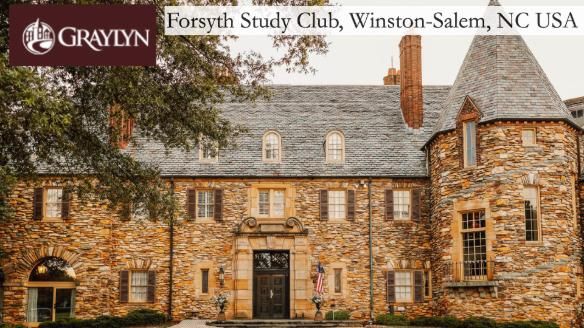
And I was lucky enough to stay at the magnificent Graylyn Estate, an extraordinary historic property surrounded by beautiful grounds.
Interestingly, Graylyn was used by the German national football team during the 2026 FIFA World Cup in America. What an amazing place to stay!
The whole setting was absolutely wonderful and made the trip even more memorable.
Thank you, Winston-Salem!
The whole experience was just fantastic, from the teaching and the wonderful hospitality to the friendships, the laughter and the beautiful surroundings.
A massive thank you to Todd, Brad, Brittany, Steph, Ben, Blake, Jeff, Vic, Hudson, Dan and everyone at the Forsyth Study Club.
You made the visit incredibly special, and I genuinely loved every minute of it.
Trips like this remind me why I love teaching so much. It's not just about dentures or sharing clinical techniques. It's about bringing people together, learning from each other, building friendships and hopefully making a positive difference to the care our patients receive.
What a wonderful profession we're part of!
I really hope to see you all again soon!